Ready to build your own Founder-Led Growth engine? Book a Strategy Call

Frontlines.io | Where B2B Founders Talk GTM.
Strategic Communications Advisory For Visionary Founders



Actionable
Takeaways
Execute one high-leverage launch that proves marketing's strategic value:
Marc's Series B launch with Stripe generated global media attention through a creative PR strategy that positioned CEO Arik Shtilman as the category spokesperson. The breakthrough came from making Arik the public voice of "Fintech as a Service" rather than issuing standard funding announcements. This single campaign permanently shifted how Rapyd's board and CEO viewed marketing investment. Identify the moment—major funding, game-changing partnership, category creation—where creative execution can deliver outsized visibility, then design a campaign that makes leadership believers.
Category creation succeeds when you simplify the complex through familiar frameworks:
Marc created "Fintech as a Service" by applying the understood cloud computing model to payments infrastructure. Six years ago, connecting global payment networks through a single API was incomprehensible to buyers. Positioning it as "the AWS of payments" made it instantly clear. Find the adjacent category or proven model your buyers already understand, then position your innovation within that framework. Own the terminology before competitors claim it. The category stuck because it explained a trillion-dollar market opportunity through an existing mental model.
Design brands that competitors can't replicate due to organizational risk tolerance:
Rapyd's punk rock aesthetic works in financial services because most companies won't take the creative risk, making the brand itself a competitive moat. Marc's team surveyed hundreds of merchants across dozens of markets, worked with top-tier agency Known for eight months, and invested multi-six figures. But the real moat isn't budget—it's willingness to be radically different in a trust-dependent industry. Most competitors saw what Rapyd did, wanted to copy it, but their risk tolerance prevented execution. Build brands that require organizational courage competitors don't have.
Use market-by-market launches to create compounding enterprise credibility:
Rapyd launched methodically in each new geographic market rather than one global announcement. Enterprise buyers in the UK would see Rapyd enter Thailand, then Mexico, building credibility through repeated proof of global expansion. Each launch reinforced the "operating in 190 countries" narrative. For companies serving multinational enterprises, treat geographic expansion as a brand-building drumbeat. Every new market entry becomes evidence of scale and momentum that compounds with previous launches.
Rebrand when market conditions demand differentiation, not on arbitrary timelines:
Marc executed three complete rebrands driven by specific triggers: business strategy shifts, competitors copying Rapyd's approach, and the "sea of sameness" problem where financial services marketing became indistinguishable. The third rebrand came when walking into Money 2020 meant seeing identical messaging, colors, and positioning across competitors. Time your rebrands to competitive conditions: when your category gets crowded with copycats, when strategy evolution makes current positioning obsolete, or when market oversaturation eliminates your differentiation.
Establish brand foundations before investing in sophisticated creative execution:
Marc's sequencing for early-stage companies: first, explain what you do clearly. Second, develop your unique selling proposition and validate it identifies a burning problem. Third, gather customer testimonials and social proof. Fourth, test messaging through founder social media. Only then invest in professional brand work. His first Rapyd brand cost under $50K and focused on communicating fintech as a service. The latest cost multi-six figures after the company had scale and validated positioning. Match brand investment to your stage.
Prioritize brand voice over visual identity—voice creates emotional connection at every touchpoint:
Marc emphasized that Rapyd's brand voice drives more value than visual elements. Voice includes the specific words used, how the company communicates across channels, and messaging style. Phrases like "Build Bold," "No Guts, No Glory," and "Liberate Global Commerce" came from extensive work defining how Rapyd speaks. The voice reflects founder personality and connects with buyers emotionally. Before investing heavily in logo and visual systems, document your brand voice: the language you use, terms you avoid, how you structure messages, and the personality that comes through in every customer interaction.
Conversation
Highlights
How Rapyd’s First Marketing Hire Built a $1B ARR Brand That Competitors Can’t Copy
Walking into Money 2020, Marc Winitz saw the same problem repeating across every booth: identical corporate blue color schemes, interchangeable trust messaging, indistinguishable positioning.
The financial services industry had become what he calls a “sea of sameness.”
In a recent episode of Unicorn Marketers, Marc—CMO of Rapyd—shared how he joined as the first marketing hire when the company had 30 employees and built the marketing function supporting Rapyd’s growth to over $1 billion in projected ARR across 190 countries.
His approach: create a brand inspired by 1970s-80s LA punk rock and surf culture in an industry where everyone else plays it safe.
The result became a competitive moat. Competitors saw what Rapyd built, wanted to copy it, but couldn’t execute because their organizational risk tolerance wouldn’t allow it.
The Series B Launch That Proved Marketing’s Value
When Marc joined Rapyd in 2017, CEO Arik Shtilman presented a vision that sounded impossible: “Essentially connect all the world’s payment networks together and just plug into it in this simple way. Think of it like an easy button for payments.”
Marc’s reaction: “Wow, that’s just crazy what you’re ask for. No one can do that.”
He told his wife about the opportunity. Her response: “Oh, you’re not going to do that, are you?”
Marc: “Oh no, no, I’m totally going to do this.”
His first major test came with Rapyd’s Series B from Stripe’s corporate VC arm and General Catalyst. Rather than issue a standard funding announcement, Marc designed a PR strategy that would permanently change how Rapyd’s leadership viewed marketing.
The concept: create “Fintech as a Service” as a new market category and position Arik as the public spokesperson.
Marc explains the positioning logic: “It’s about cloud computing. It’s about all of the things that the cloud delivers that you don’t want to do. No different in payments than it is in computing.”
Six years ago, connecting global payment networks through a single API was incomprehensible to buyers. “It seems normal what I’m saying now, but six years ago no one even understood what I just said,” Marc notes.
By borrowing the cloud computing framework buyers already understood, Marc made Rapyd’s complex infrastructure immediately clear.
The launch generated major global media attention. Arik saw the business impact and became a proponent of brand investment, telling Marc: “Most CEOs really don’t understand marketing or what it takes and what you need to go do.”
That single campaign earned marketing a permanent seat at the strategic table.
Category Creation Through Borrowed Frameworks
The “Fintech as a Service” category worked because it communicated a trillion-dollar market opportunity without requiring extensive buyer education.
The strategy worked so effectively that competitors copied it. “Stripe, who was an investor in Rapid, kind of copied some of what we did and even Adyen, who’s a major player in Europe,” Marc says.
Which created Rapyd’s next challenge: when everyone adopts your positioning, how do you differentiate?
Marc’s answer came from identifying what was missing across the entire financial services sector: emotion.
He studied brands like Apple that created emotional connections with complex technology. “They essentially have turned what is arguably a very complex technology and made it cool,” he describes.
The question: could you create emotion in B2B financial services while maintaining the trust required in a regulated industry?
Building Brand as a Competitive Moat
Marc found his answer in an unexpected place: growing up in Los Angeles and San Diego during the ’70s and ’80s, immersed in punk rock and surf culture. “Super edgy, super intense.”
He wondered: “Is there a way to get people excited about a company that is going to go deliver your money, but do it in a way that kind of stands out in a really unique and sort of fun way?”
The development process was extensive. Marc hired Known, a top-tier New York brand agency. They surveyed hundreds of merchants across dozens of markets, conducting both qualitative and quantitative research. The project took eight months.
The investment: multi-six figures for the brand development, compared to under $50,000 for Marc’s first Rapyd rebrand years earlier.
The output included establishing a brand idea—”Build Bold”—that reflected Arik and the co-founders’ willingness to attempt anything. “They’ll do anything because they think they can do anything,” Marc says. “If we’re going to go into this market and we’re going to go launch in there and go figure it out and get messy, and we don’t care if it fails, it’s okay.”
This brand idea extended to customers. “You could be a major client, like, you know, Meta, let’s say, or Netflix, or you could be a little mom and pop, you know, on some corner, you know, in a small town in England. And your ambitions are your ambitions. And to you, they’re huge.”
The visual identity broke every financial services convention. Today, Marc says: “When you walk into a major trade show or exhibition or whatever, I mean, you will see a rapid, you know, experience. It’s not a booth. We have a saying, like, booths are for losers.”
Why Competitors Can’t Replicate It
The most significant outcome wasn’t just differentiation—the brand became defensible.
Competitors including Nium and Airwallex saw what Rapyd built. Some wanted to copy the approach. But they couldn’t execute.
“A lot of companies won’t take the risk,” Marc explains. “But I think that’s one of the cool things about Ark is he’s willing to kind of take the risk on things if it makes sense. And it was a calculated risk, but it worked.”
The barrier wasn’t budget or creative capability. It was organizational courage.
Most financial services companies won’t make bold creative choices because leadership fears it will undermine trust signals. Rapyd proved you could create wild, edgy aesthetics while maintaining credibility in a trust-dependent, regulated industry.
The brand itself became a moat because replicating it requires organizational risk tolerance most companies don’t have.
Strategic Brand Moves: Concerts and Market-by-Market Launches
The brand evolution included unexpected tactics. CEO Arik hosted concert series in Tel Aviv featuring David Guetta and Armin van Buuren—top-tier EDM artists.
The concerts faced media backlash but solved a critical business problem: engineering recruitment in Israel. “The concert series actually attracted a lot of conversation, both in the employment sector in that country at that point, but also with venture capitalists,” Marc says.
Rapyd then executed systematic global expansion. Rather than one announcement, they launched market-by-market—UK, Thailand, Mexico—creating compounding visibility.
Marc describes the buyer experience: “Hey, I’m in the UK and I heard about this company called Rapid, and they can connect me into the world’s local payment networks with a single API. It’s an easy button. Oh, and look, they just launched in Thailand. And hey, look at this. Now they’re over here in Mexico.”
Each launch reinforced global capability. For companies serving multinational enterprises, geographic expansion becomes repeated proof of scale.
The Brand Element That Actually Drives Results
After executing three complete rebrands, Marc identified what creates business impact.
“The thing that really matters is the voice,” he emphasizes. “The words that are used, how we actually state what we do, the way that we kind of communicate things in different channels. That brand voice is really where the gold really lies in building a brand.”
Visual identity gets attention. Voice creates connection and drives conversion.
Rapyd’s voice includes phrases like “Build Bold,” “Liberate Global Commerce,” and “No Guts, No Glory”—developed through extensive qualitative research to reflect founder personality and resonate with target buyers.
This voice operates at every touchpoint: website copy, sales conversations, social media, product documentation. It creates emotional connection where competitors stick to corporate speak.
“That’s what is moving the needle in terms of driving top of funnel,” Marc says. “It’s not the am I optimizing my Google Ad spend? I mean, yeah, you got to do that. That’s just part of the job. But it’s like that’s not what allows you to differentiate.”
Building the Marketing Organization: 30 to 1,500 Employees
Marc built Rapyd’s marketing from solo hire to 40 people (30 direct employees plus contractors), with 70% distributed outside the United States.
The structure includes demand generation, field marketing, heavy product marketing, partner marketing (major investment in the last 18 months), web and content, brand and communications with an internal creative agency, developer marketing, marketing operations, strategy, and marketing programs.
Marc notes that Rapyd is structured as “an enterprise sales business. Even the small and medium business work that we do comes through larger partner channels. So those are really service like enterprise clients.”
“Marketing plays an outsized role in Rapid’s valuation and how it’s perceived globally,” he says.
Stage-Appropriate Brand Investment
For early-stage companies, Marc recommends different sequencing.
- First: “You need to start as best as you can to explain what you do. That’s a good enough start.”
- Second: establish your unique selling proposition. Marc references the classic positioning book by Ries and Trout, emphasizing: “What is the burning your hair crazy situation that you are solving for that no one else can solve for?”
- Third: align your USP to that burning problem, then validate it with actual customers. “Hey, Brett, I’m an early stage founder. I’m just trying to kind of work out my elevator pitch. Here’s what it is. I’m going to say it to you now. Critique it. Tell me, did it work? Did it not work? Did it push a button for you?”
- Fourth: gather customer testimonials—both written and video. “Nothing beats well produced testimonials.”
- Fifth: test messaging through founder social media before investing in professional brand work.
Only then invest in sophisticated brand development. “The earliest stage stuff really isn’t going to do much for people, honestly. You’re going to have to kind of professionalize it if you’re going to attract enough attention to start to build a funnel.”
When to Rebrand: Three Triggers
Marc executed three complete rebrands at Rapyd, each driven by specific market conditions.
The first rebrand came after the Series B launch. The inherited brand “was not really representative of anything,” so Marc built something that communicated fintech as a service.
The second responded to competitors copying Rapyd’s approach. When Stripe, Adyen, Nium, and Airwallex started mimicking the positioning, Rapyd needed new differentiation.
The third addressed the “sea of sameness” problem. Walking into Money 2020 meant seeing identical messaging, colors, and corporate aesthetics across every competitor.
Marc’s framework: “The signs you’re looking for” for rebranding is when “the market just got oversaturated with everyone saying the same thing.”
Time rebrands to competitive conditions, not arbitrary schedules. Rebrand when your category gets crowded with copycats, when strategy evolution makes current positioning obsolete, or when market oversaturation eliminates differentiation.
The ROI Question
For founders questioning brand investment ROI, Marc points to measurable outcomes: larger funnels, shorter sales cycles, and enterprise credibility.
The challenge for unknown companies: “When you’re rapid or no name not,” enterprise buyers won’t take your call. “When you come from another company, a big company, whatever, pick it, Amazon, Oracle, whatever, and you’re that salesperson, you know, you’re calling into an enterprise that enterprise will take your call because you’re Amazon or you’re Enterprise or your Cisco.”
Strategic brand investment changes that dynamic. It creates credibility to get meetings and differentiation to stand out once you’re there.
Match investment to stage. Early-stage needs clarity and proof points. Growth-stage needs differentiation and category positioning. At scale, brand becomes the moat competitors can’t cross.
Rapyd’s journey from 30 employees to projected $1 billion ARR demonstrates what’s possible when a founder understands marketing’s strategic value—and when a CMO has the courage to break every convention in a conservative industry.
Recommended Founder
Interviews

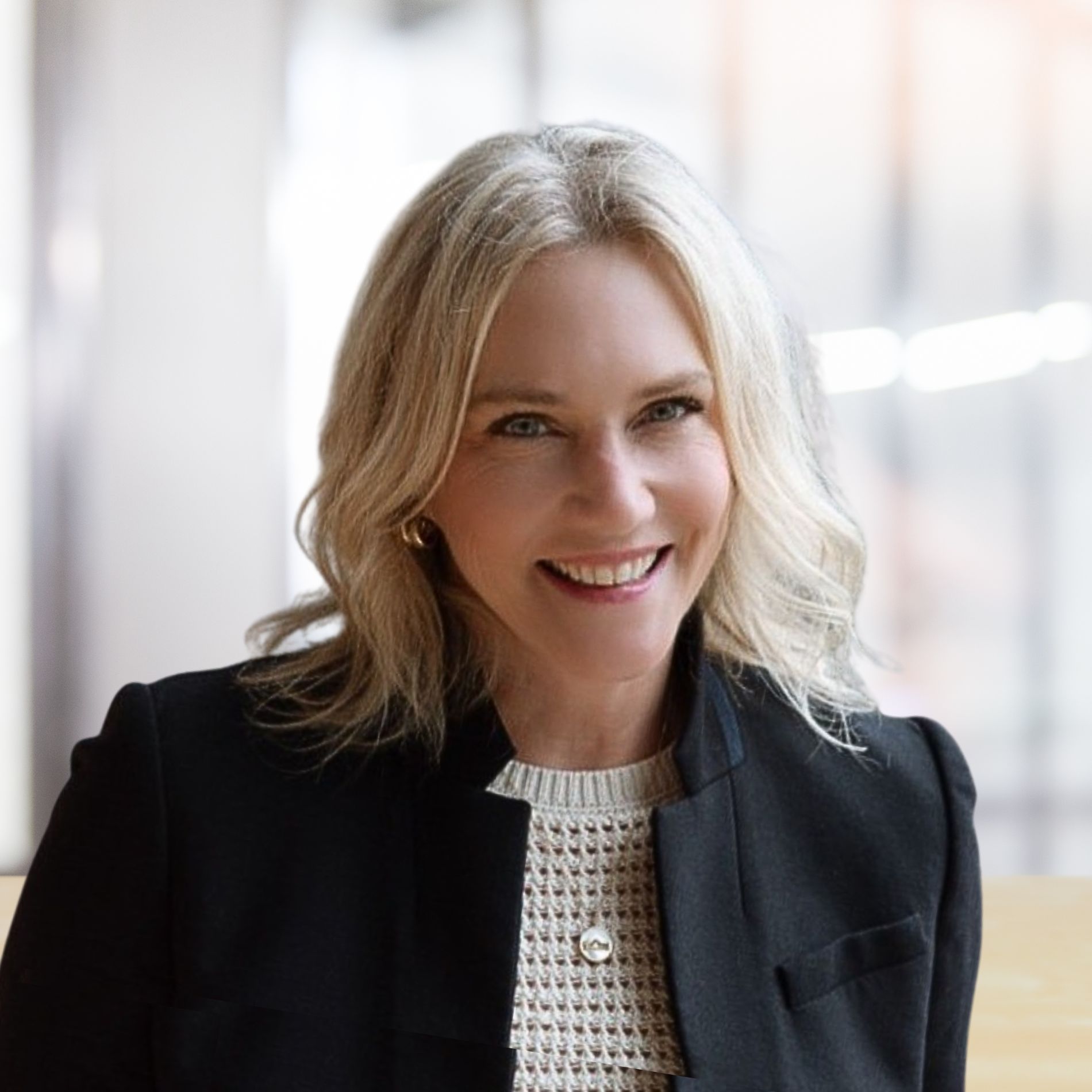
Keri McGhee
Chief Marketing Officer of Attentive
Why Attentive built three distinct buyer communities | Keri McGhee, Attentive


Micha Hershman
CMO of JumpCloud
S1 E3: Navigating From Growth at All Costs to Efficiency: JumpCloud’s CMO Shares Playbook


Gino Palozzi
CMO of DailyPay
S1 E1: Empathetic Leadership: The Key to Managing a Thriving Marketing Team (Gino Palozzi, CMO at DailyPay)


Jason Marshall
Chief Marketing & Growth Officer of Huntress
S2 E3: Unpacking the Huntress Growth Playbook w/ Jason Marshall: Reddit, Community, and Customer Love


Paroma Sen
VP of Corporate Marketing of Astera Labs
S2 E1: Paroma Sen: The Tiramisu Strategy: How Paroma Sen Built Astera Labs’ Marketing from Scratch During IPO


Kristen Bryant Smith
VP of Marketing of Help Scout
S1 E4: Scaling a Customer-Centric Remote Marketing Team: Insights from Help Scout’s VP Marketing


Leslie Lee
VP of Marketing of Deel
S1 E5: Scaling Global Teams: Inside Deel’s Marketing Strategy with Leslie Lee


Andrew Davies
Chief Innovation Officer of Paddle
S1 E2: Navigating Remote Marketing Leadership: Lessons from Paddle’s CMO


David Gales
Head of Marketing of Oyster
S2E3: Building Executive Thought Leadership That Actually Drives Revenue w/ Oyster’s David Gales