Ready to build your own Founder-Led Growth engine? Book a Strategy Call

Frontlines.io | Where B2B Founders Talk GTM.
Strategic Communications Advisory For Visionary Founders



Actionable
Takeaways
Your beachhead ICP isn't always your dream customer.
Motif's initial hypothesis was to go straight to the largest, most prestigious architecture firms — the ones Amar knew from 30 years in the industry. The reality: enterprise architecture firms have slow, careful adoption processes. Security reviews, privacy requirements, and organizational inertia meant it would take much longer to build even an MVP-level product for them. The pivot was to mid-sized firms that were willing to adopt before the product was fully polished. The lesson isn't "avoid enterprise" — it's that your beachhead should be the customer who can give you real signal fastest, not the one with the most impressive logo.
In change-resistant markets, "better" doesn't sell — "new" does.
When selling into industries with deeply embedded workflows, positioning around improvement ("faster, cleaner, easier") forces prospects to weigh switching costs against incremental gains. Amar's framework: find the thing they flat-out cannot do today, and lead with that. For Motif, this was AI-powered rendering that returned a photorealistic image in seconds, and shareable design links that let architects say "take a look at this atrium I just created" for the first time ever. Neither of those replaced an existing workflow — they created a new one, which meant zero switching cost friction. Then, once users are inside the product for the net-new thing, you expand into the existing workflows.
PLG requires a full commitment — half measures slow you down.
Amar is direct about his biggest GTM regret: hiring account execs and chasing larger enterprise deals before the product was ready for self-serve adoption. The problem compounds quickly — a sales team targeting enterprise naturally pulls product priorities toward enterprise requirements, which delays the polish and simplicity that PLG actually needs. His retrospective: go PLG-only until the growth loop is working, then layer in sales. The sequencing matters as much as the strategy.
Pricing is a barrier to the first step, not just a revenue lever.
Motif went to market with pricing that reflected their confidence in the product — and it slowed adoption. Amar's reflection: in a PLG model, the most important thing is getting people through the door and to a value moment. If the first step feels expensive or risky, people don't take it. Price the entry point to remove friction, then expand revenue as users realize value. Monetization strategy should match adoption stage.
Magic moments are observed, not hypothesized.
Motif didn't run surveys or A/B tests to find their magic moments — they watched. Amar describes the skill as product taste: the ability to read a customer's reaction and know that something just landed, whether they're extroverted about it or not. The second signal is what customers spontaneously tell other people. When a specific feature gets mentioned in word-of-mouth referrals unprompted, that's the confirmation that you have something worth doubling down on. The implication for founders: you need people on your team who can be in the room with customers and read those moments in real time.
Your entry wedge needs to be on the critical path to your full product vision.
With a large product surface area — Motif is ultimately building a comprehensive design system — the danger is picking a wedge that generates early traction but sits outside your core product trajectory. Amar describes their process as a two-by-two: customer adoption readiness on one axis, engineering feasibility on the other. They spent six months pre-company in 2022 working through this with design partners — not by asking "what would you use?" (customers rarely answer that usefully) but by asking where they were spending time and money, and where they had no entrenched tool loyalty. The wedge they chose had to be genuinely useful, low-friction, and structurally on the road to the full vision — not a cul-de-sac they'd have to unwind later.
Cap domain experts at one-third of the team.
Motif deliberately limits AEC (Architecture, Engineering & Construction) veterans to no more than a third of headcount. The reasoning is precise: PLG wasn't invented in AEC — it was built and refined at companies like Figma and Notion. If your entire team comes from the industry you're disrupting, you'll default to the assumptions and patterns of that industry. Bringing in people who have actually run PLG motions at modern SaaS companies transfers the playbook directly, rather than forcing you to rediscover it.
Conversation
Highlights
How Motif Is Rebuilding Architectural Design Software From the Ground Up — and the GTM Lessons That Almost Didn’t Make It
There’s a version of Motif‘s story where Amar Hanspal — nearly 30 years at Autodesk, deep relationships across the architecture and construction world — launches his company, calls his enterprise contacts, and lands a handful of large firms as anchor customers.
That version didn’t happen.
In this recent episode of BUILDERS, Amar, CEO of Motif, walked through the real version: the wrong ICP, the premature sales hires, the pricing that slowed adoption before it could start, and six months of foundational work done before the company even had a name. It’s a more useful story.
The ICP You Know Is Not Always the ICP You Need
Motif is building a browser-based, AI-native design system for architects, engineers, and general contractors. The market Amar is going after is large — building design software has been dominated by legacy desktop tools for decades — and his instinct was to start with the firms he knew best.
“Many of the architecture firms I knew were the very large ones,” he explains. “They build amazing buildings everywhere, but their adoption process is a little more careful.”
That carefulness has a practical cost at the enterprise level: security reviews, privacy requirements, lengthy procurement cycles. For an early-stage product, selling to those firms doesn’t just consume time — it redirects your roadmap toward their requirements instead of your growth loop.
The shift was to mid-sized architecture firms. Not a consolation prize — a deliberate recalibration toward the customer who could give real signal fastest. “The iteration we had to make was to find our way to the medium sized architecture firms where they tend to be a little bit more ready to say, hey, I think this thing is still raw but great, I’ll go with it.”
That recalibration took roughly six months — April to October of last year. Part of what made it take that long is structural to the industry: architecture firms evaluate new tooling when they switch projects, and building projects run on two-to-three year cycles. Iteration has to be timed to when buying decisions actually happen, not when you’re ready to sell.
Why “Better” Doesn’t Sell in Entrenched Markets
The instinct for most founders displacing legacy software is to lead with improvement: faster, cleaner, more intuitive. Amar’s view is that this framing is a trap.
When you position against an existing tool, you’re asking the buyer to weigh incremental gains against real switching costs — not just the product, but the people they’ve trained on it, the workflows they’ve built around it. “Sometimes not just the product, but they’ve got other people they’ve taught how to use this product. Like it’s a bigger change thing.”
His alternative: find the thing they cannot do at all today, and lead with that.
“You’ve got to find something they’re not able to do right now… when you find the net new thing they can do, that’s the way to drive change.”
For Motif, this took two forms. The first is AI-powered rendering — architects can generate a photorealistic building image without touching a separate tool. The second is something structurally simpler but equally significant: a shareable link.
“You and I can share a YouTube link and you can send me, hey, take a look at this TikTok video. Like, you could never do that with architectural design to say, hey, take a look at this atrium I just created. What do you think of it?”
Neither replaced an existing workflow. Both created new ones, which means there’s no switching cost conversation. The mechanism matters: you enter through the net-new capability, then expand into the workflows they were previously handling elsewhere.
The PLG Commitment Problem
Motif’s go-to-market is product-led growth — a deliberate fit for a market of small to medium-sized firms that discover and adopt tools the way they do Notion or Slack. But Amar is direct about not fully committing to it from the start.
“I think right from the get go I was like, hey, listen, let’s just staff up the team and let’s build maybe account execs a little too soon.”
The downstream effect of that decision is worth understanding precisely. A sales team hired before the self-serve loop works will naturally chase the deals it can close — which at an early stage means larger accounts. Larger accounts pull product priorities toward enterprise requirements. Enterprise requirements are the opposite of what a PLG motion needs to mature.
“If you had gone PLG first right from the get go and only PLG, I think [it] would have had us accelerate.”
Pricing compounded the problem. Motif launched with prices that reflected their confidence in the product — and created friction at exactly the moment they needed adoption. “We were very optimistic in the early days of high prices… we should have kept the first step really simple for someone to take.”
The principle is precise: in a PLG model, entry pricing is an adoption variable, not a revenue variable. Optimizing for the wrong thing at the wrong stage costs time that doesn’t come back.
Building a Team That Can Actually Execute PLG
Motif has a hard internal cap: AEC — architecture, engineering, and construction — domain experts make up no more than one-third of the company. The rest are deliberately hired from outside the industry.
“PLG is not an AEC thing. PLG got perfected in other industries. So you need to bring in people who may have worked at Figma or Notion and you know, those people really teach us.”
The logic is specific, not generic. If your entire team comes from the industry you’re disrupting, you default to that industry’s assumptions — including its assumptions about how software gets bought and adopted. The fastest path to executing a motion you’ve never run before is to hire people who have already run it somewhere else, then mix that DNA with the domain knowledge you need.
The Entry Wedge Framework
Building a comprehensive design system means an enormous product surface area. The risk for any founder in that position is picking an entry point that generates early traction but sits off the critical path to the full vision — a detour that looks like progress until you have to reverse it.
Motif spent six months before founding the company working through this problem with design partners. The insight Amar surfaces about those conversations is worth holding onto: asking customers what they want doesn’t work.
“They never answer the question directly like in the language that we could translate to the rest of the team.”
What worked was asking where they were spending time and money, and where they had no entrenched loyalty to existing tools — the areas with “no sort of religion,” as Amar puts it, about the current stack. That surfaced the zones where experimentation felt low-risk to the customer.
The output was effectively a two-by-two: customer adoption readiness on one axis, engineering feasibility on the other. The wedge had to sit at the intersection — and critically, it had to be on the road to the full product, not adjacent to it.
“The first step we took was a path to the ultimate destination… it wasn’t like we’re off here in the cul de sac just trying to solve this one problem and then we’ve got to get back on the main road.”
That process concluded in 2022, before Motif was formally founded.
The long-term vision Amar is building toward is equally specific: free architects from the administrative grind of compliance documents and quality control checks, and return the creative work to the center of the profession. “Our [goal] is to free them from the drudgery and liberate them to do the creative work.”
The GTM decisions made in the first two years — who to sell to, how to price, when to hire sales, where to start — will determine whether that vision is reachable. Motif’s early chapters are a useful map of where those decisions go wrong, and what it takes to correct them.
Listen to the full conversation with Amar Hanspal on BUILDERS.
Recommended Founder
Interviews


Alexandre Teplitxky
Senior Vice President of Marketing of SmartPM Technologies
How to Win with Original Research Featuring SmartPM’s Alexandre Teplitxky


Marco Herbst
CEO of Evercam
Marco Herbst, CEO of Evercam: €12.8 million Raised to Reimagine Construction Cameras


Josh Levy
CEO & Co-Founder of Document Crunch
Josh Levy, CEO & Co-Founder of Document Crunch: $38 Million Raised to Transform Construction Risk Management Through AI


Lindsay Powers
Senior Vice President of Marketing of STACK Construction Technologies
How STACK Built a Custom GPT to Close Content Gaps


Eric Helitzer
CEO & Founder of SubBase
Eric Helitzer, CEO & Founder of SubBase: $5 Million Raised to Innovate Construction Materials Management


Jack Oslan
Founder & Executive Chairman of Diamond Age
Jack Oslan, Founder & Executive Chairman of Diamond Age: $58 Million Raised to Build the Future of 3D Printed Homes


Brynne Hazzard
Director of Global Marketing of FYLD
The Bare-Bones ABM Strategy That Doubled FYLD’s Revenue


James Gallagher
CEO & Co-Founder of GreenLite
How GreenLite discovered architects were the wrong ICP after 6 months of customer interviews | James Gallagher


Brian Giamo
CEO & Co-Founder of Activate OS
Brian Giamo, CEO & Co-Founder of Activate OS: Raising $4M+ to Build an Equipment Management Operating System for Construction


Nick Hegeman
CEO and Co-Founder of Paintjet
Nick Hegeman, CEO & Co-Founder of Paintjet: $17 Million Raised to Build the Future of Commercial Painting with Robotics


Sherry Chapman
VP of Marketing of Fortera
Building Trust When Your Product Holds Up Buildings


Ari Bleemer
CEO and Co-Founder of OneCrew
How OneCrew resisted horizontal expansion to dominate one vertical in construction software | Ari Bleemer


Luke Hansen
CEO and Founder of CompanyCam
Luke Hansen, CEO and Founder of CompanyCam: $38 Million Raised to Build the Future of Visual Communication for Contractors


Anwar Ghauche
CEO and Founder of Constrafor
How Constrafor built indirect distribution to reach 75,000 companies: Selling to general contractors to access their subcontractors | Anwar Ghauche ($400M Raised)


Marc Minor
CEO & Co-Founder of Higharc
Marc Minor, CEO & Co-Founder of Higharc: $80 Million Raised to Build the Home Building Cloud Category


Jack Sadler
CEO and Co-Founder of Part3
Jack Sadler, CEO & Co-Founder of Part3: $2.5 Million Raised to Build the Future of Construction Administration


Bryan Kester
CEO of SiteWire
Bryan Kester, CEO of SiteWire: $3.2 Million Raised to Transform Construction Finance


Nyasha Gutsa
CEO of Billy
Nyasha Gutsa, CEO of Billy: $4 Million Raised to Build the Future of Construction Insurance


Amar Amte
CEO & Founder of Pegbo
Amar Amte, CEO & Founder of Pegbo: $1.4 Million Raised to Transform Construction Supply Chain Diversity


Sandeep Ahuja
CEO of Covetool
Sandeep Ahuja, CEO of Covetool: $36 Million Raised to Power the Future of Building Design with AI

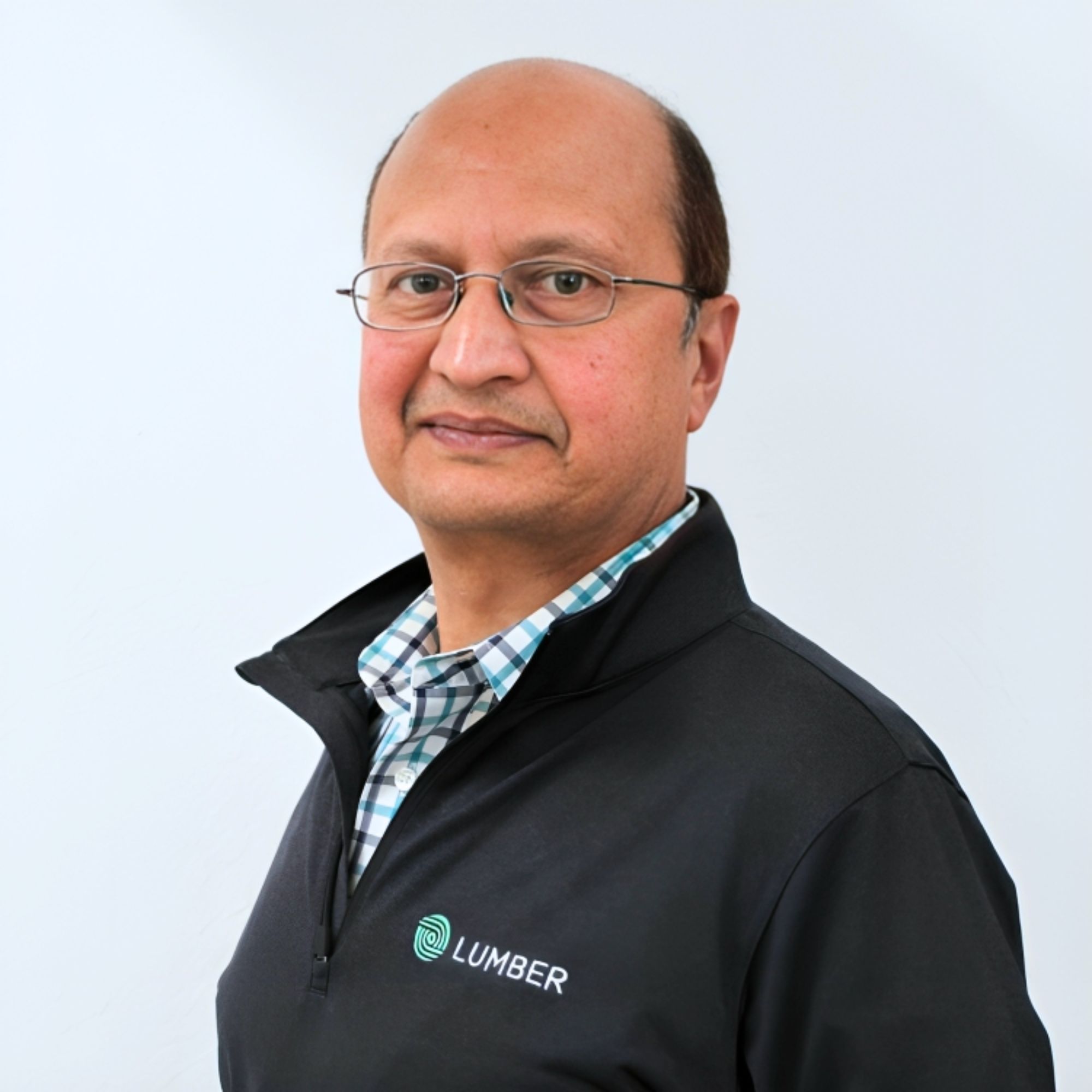
Shreesha Ramdas
CEO & Co-Founder of Lumber
Shreesha Ramdas, CEO & Co-Founder of Lumber: $21 Million Raised to Transform Construction Workforce Management


Stephanie Seril
Head of Marketing of Tough Leaf
CMO’s Guide to Saying No to Your Board and Keeping Your Job


Tom Yeshurun
Co-Founder & CEO of Civ Robotics
Why Civ Robotics trains construction engineers into sales reps instead of hiring salespeople | Tom Yeshurun




Mark Zurada
Co-Founder of PinPoint Analytics
Mark Zurada, Co-Founder of PinPoint Analytics: $4 Million Raised to Transform Public Works Bidding with AI

Zach Scheel
CEO of Rhumbix
Zach Scheel, CEO of Rhumbix: $46 Million Raised to Transform Construction Workforce Management


Nathan Silvernail
Co-Founder and CEO of Plantd
How Plantd identified business process inefficiencies as a competitive wedge in building materials | Nathan Silvernail


Nitin Bhandari
CEO & Co-Founder of Planera
Nitin Bhandari, CEO & Co-Founder of Planera: $19 Million Raised to Transform Construction Scheduling Technology


Tessa Lau
Founder & CEO of Dusty Robotics
Tessa Lau, Founder & CEO of Dusty Robotics: $69.5 Million Raised to Automate Construction Quality Through Robotics


Chloe Smith
CEO and Co-Founder of Mercator AI
Chloe Smith, CEO & Co-Founder of Mercator AI: $4.5 Million Raised to Build the Future of Construction Tech


Wyatt Smith
CEO and Founder of UpSmith
Wyatt Smith, CEO and Founder of UpSmith: $3.3 Million Raised to Fill the Skilled Labor Gap

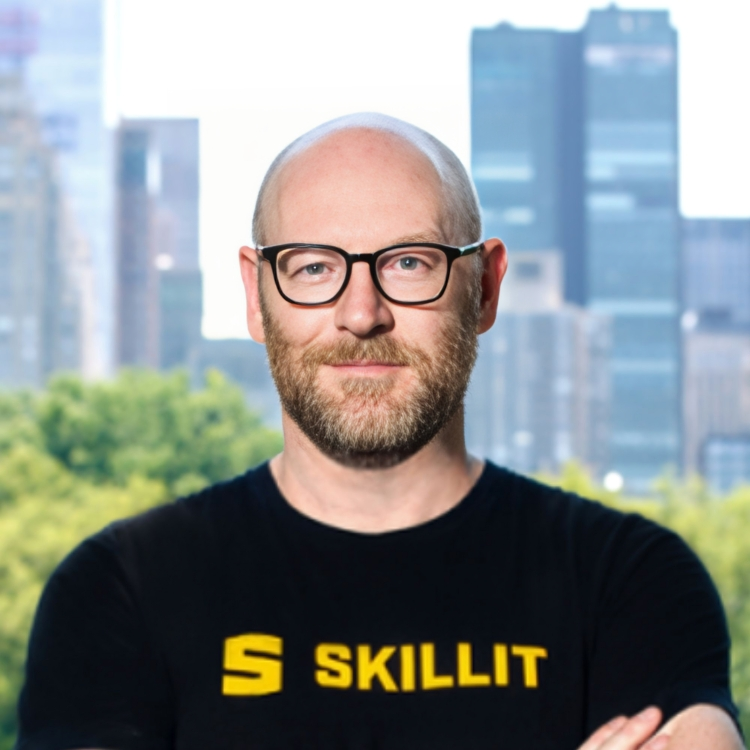
Fraser Patterson
CEO and Founder of Skillit
Fraser Patterson, CEO and Founder of Skillit: $13 Million Raised to Tackle the Skilled Labor Crisis in Construction

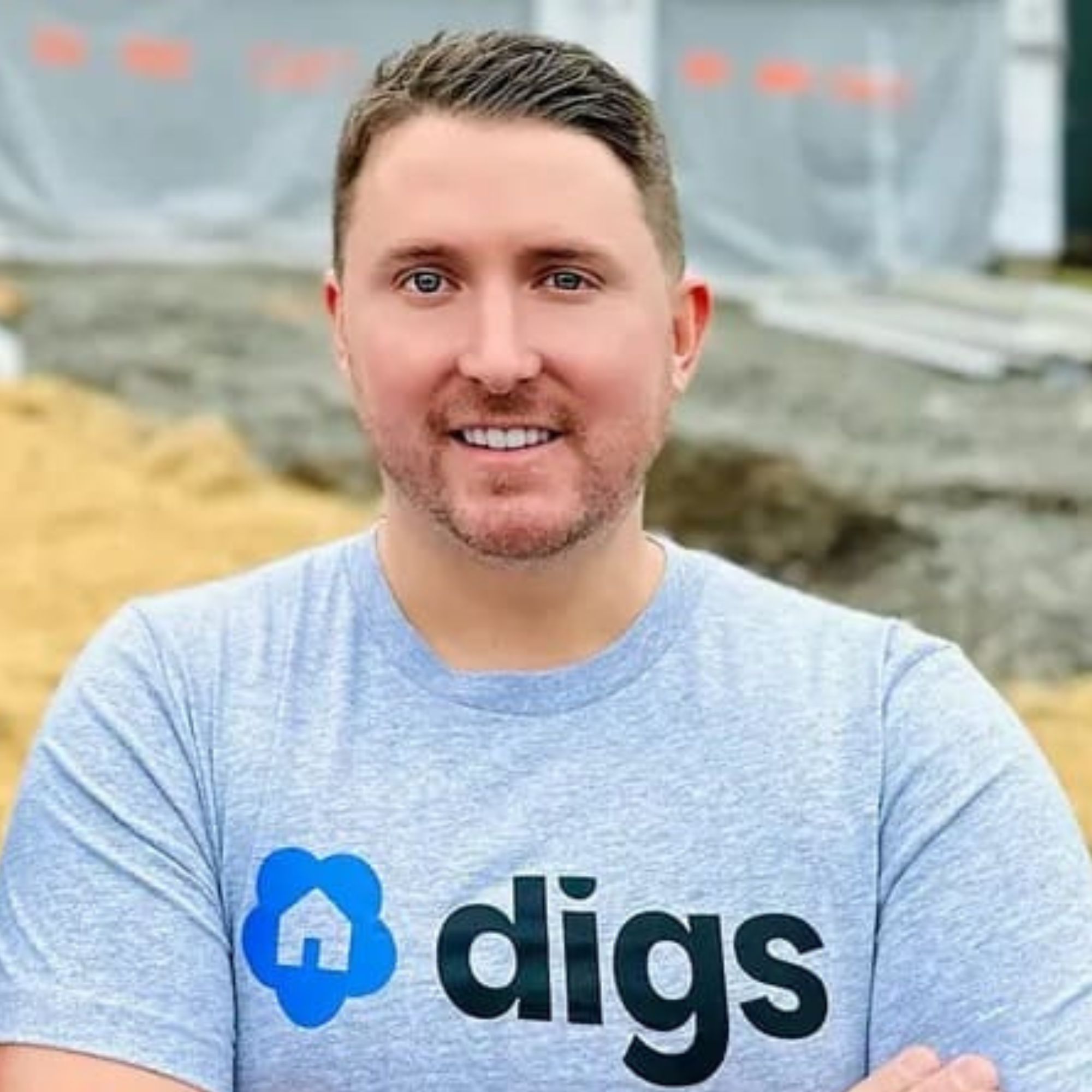
Ryan Fink
CEO & Co-Founder of Digs
Ryan Fink, CEO & Co-Founder of Digs: $14 Million Raised to Power the Future of AI Collaboration for Builders