Ready to build your own Founder-Led Growth engine? Book a Strategy Call

Frontlines.io | Where B2B Founders Talk GTM.
Strategic Communications Advisory For Visionary Founders



Actionable
Takeaways
Audit your team's DNA before choosing your GTM motion.
EverWorker launched PLG, then quickly realized their entire founding team came from enterprise — Microsoft, VMware, Veeam. The pivot wasn't a failure; it was an honest read of where their unfair advantages actually lived. Before committing to a motion, map your team's network, sales instincts, and domain depth. Those signals will outperform market trend-chasing every time.
Build a services layer or watch your pilots die.
The gap between AI pilot and production is where most deals go to die — Anton cites the widely-reported stat that the vast majority never make it through. EverWorker's solution was to build a services organization that identifies two or three mundane, high-friction processes — Anton's example is data entry, work humans find demeaning and AI handles well — automates them fast, and uses that visible win to build organizational trust. The services layer isn't a concession. For complex AI sales right now, it's the mechanism that actually converts pilots into production.
Your ICP should be defined by who won't default to "we'll build it ourselves."
EverWorker learned this the hard way in enterprise. Walk into a Fortune 500 or a tech-forward company and IT shows up in the room and kills the conversation. Anton's team shifted toward what he calls "boring billion-dollar companies" — industries doing real, essential work that don't get the spotlight and can't afford to staff AI expertise internally. These buyers need the outcome, not the platform, and they don't have an internal team to rationalize building around. That dynamic is a structural GTM advantage.
The real competition isn't other AI vendors. It's the cognitive overload of too much software.
Anton's sharpest insight isn't about positioning against a competitor — it's about repositioning against SaaS itself. His argument: business software was built to make processes more efficient, but the actual need is information to make decisions and execution to act on them. Agents working over a database and markdown files can deliver both without the overhead of 127 systems. For founders building in this space, the more powerful frame isn't "better than [incumbent]" — it's "what if you didn't need the software at all."
Frame your product around cognitive load, not capability.
The "Chief of Staff" concept Anton describes — one AI entry point that coordinates a team of specialized agents, surfaces context, and reduces decisions to a simple approve/redirect — is a direct response to how overwhelmed operators actually feel. Nobody wants to evaluate an AI platform. They want their pipeline reviewed before their Monday meeting without logging into four systems to get there. The closer your positioning gets to that specific relief, the shorter your sales cycle.
Going down-market in an AI-saturated app environment requires community first.
Anton is direct that paid channels alone won't break through — app stores are seeing record submission volumes and launching a new product into that noise is brutal. EverWorker's approach is to open-source tooling, share what they've learned, and build genuine two-way exchange with builders. Growth becomes a byproduct of being useful to the community before asking anything in return. That sequencing matters.
Kill the demo gate. Buyers decide faster than your SDR responds.
Anton makes this point and the host echoes it from direct experience — by the time a vendor responds to an inquiry days later, the decision has already been made elsewhere. If any part of your product can be experienced immediately, that should be the default. Friction at the top of the funnel is no longer a qualification mechanism. It's just lost revenue.
Conversation
Highlights
The Playbook Is Dead. Here’s How EverWorker Is Building a New One.
Three years ago, Anton Antich sat down with his former co-founder from Veeam — the company where they’d helped scale revenue from zero to a billion dollars over a decade — and asked a simple question: what do we actually do with AI?
What followed wasn’t a clean origin story. It was a series of hard pivots, uncomfortable market realities, and a growing conviction that the entire software industry is due for a reckoning.
In a recent episode of BUILDERS, Anton Antich, CPO and Co-Founder of EverWorker, walked through the GTM journey behind one of the more contrarian bets in enterprise AI — and what he’s learned selling into a market that Silicon Valley has dramatically misread.
The First Bet: Go Horizontal
When most AI companies in 2022 and 2023 were racing to own a vertical — replacing the SDR, the marketing manager, the customer support rep — EverWorker made the opposite call. Anton and his co-founder looked at where the technology was heading and concluded that narrowing to a single use case was leaving most of the value on the table.
The vision was inspired partly by Midjourney. “I really liked to use it at some point because I cannot draw by hand,” Anton said. “It gives people who are challenged in that area the ability to create something beautiful by just writing words. And I thought, what if we do the same but for agents?”
The initial product was an open platform — build any agent, for any purpose, without writing code. They launched with a PLG motion and waited for traction to compound.
It didn’t.
The Pivot Nobody Talks About
The PLG motion wasn’t failing because the product was wrong. It was failing because of a mismatch that’s easy to miss until it’s expensive: the team’s entire professional history was enterprise. Anton had spent his career at Microsoft, VMware, and Veeam. Community-driven, bottoms-up growth wasn’t a muscle they had.
“We understood that our DNA was not really PLG,” Anton said. “We come from the enterprise world. So we refocused — let’s go after enterprises.”
They rebranded to EverWorker, rebuilt for enterprise use cases, and started selling. What they found in real customer conversations was a problem the Valley wasn’t talking about.
The gap between the hype cycle and enterprise reality was enormous — and it was structural, not temporary.
“If you listen to Sam Altman and guys from Anthropic, you may think we already live in an amazing future with AGI coming tomorrow,” Anton said. “Then you start talking to real customers and they just have no idea where to start, what to do with it, what are the right steps to even start using AI in my company.”
This isn’t a knowledge problem that better marketing solves. It’s an organizational readiness problem — and it has significant implications for how you build your sales motion.
The Services Layer Most Founders Skip
EverWorker’s response was to build a services organization — not as a margin play, but as the mechanism that actually converts enterprise interest into production deployments.
The pattern: identify two or three processes the business already finds tedious, automate them quickly, deliver a visible win, then use that proof point to earn organizational trust and expand. Anton’s go-to example is data entry — unglamorous, high-volume, and exactly the kind of work where early AI reliability is easiest to demonstrate and hardest to argue against.
“We find two or three business processes that are kind of mundane and that humans don’t want to do anyway — like data entry,” Anton said. “We help them automate it, they gain trust, and then we can expand from there.”
The reason this matters: Anton points to the widely-cited reality that the vast majority of enterprise AI pilots never reach production. The services layer is what closes that gap. It’s not about hand-holding — it’s about owning the outcome, not just the sale.
ICP clarity came from the same process. Fortune 500s and tech-forward companies would bring IT into the room, and the conversation would immediately shift to “we’ll build it ourselves.” Rather than fighting that dynamic, EverWorker stopped pursuing those accounts entirely. Their target became what Anton calls “boring billion-dollar companies” — industries doing essential, unglamorous work at scale, without the internal AI expertise to rationalize building in-house. Large enough to need the outcome. Not resourced to DIY it.
The Argument Against Software Itself
The sharpest edge of EverWorker’s positioning isn’t about competing with other AI vendors. It’s a more fundamental argument: the SaaS model itself is the problem, and agents are the replacement — not the upgrade.
“To do my job, I have to log into 127 different systems,” Anton said. “Nobody gets anything done.”
His prescription is deliberately minimal: a database, markdown files, and AI agents. No applications, no dashboards, no SaaS subscriptions. Information surfaced when you need it. Execution handled on your behalf. The buyer doesn’t interact with software — they interact with a context-aware agent that already knows what they need to know.
“We don’t need software,” Anton said. “We need information to make decisions and we need somebody to execute stuff for us. And AI agents can do all of it.”
This reframe matters for GTM positioning because it shifts the competitive conversation entirely. You’re no longer selling against a feature set. You’re selling against a way of working — which is a harder and more durable position to take, if you can earn the right to make it.
What’s Being Built Next
In 2026, EverWorker is moving down-market with a product internally codenamed “Chief of Staff” — a single AI entry point that coordinates specialized agents underneath it, surfaces relevant context, and reduces executive decisions to a binary: approve or redirect. No system logins. No dashboard analysis. Just decision and execution.
The community motion is running in parallel. They’ve open-sourced tooling, are investing in education, and are building genuine two-way exchange with builders before asking anything in return. Anton is explicit that in a market where app stores are flooded and paid channels are increasingly noisy, community isn’t a nice-to-have — it’s the only reliable path to earned trust at the bottom of the funnel.
And the demo gate is coming down. “Nobody wants to contact anybody for a demo,” Anton said. “I just want to try something right now. If I like it, I’ll go with you.”
For founders building in this space, the EverWorker story is worth sitting with — not because it’s a clean success narrative, but because it isn’t. It’s an account of what happens when a strong team with real enterprise experience runs headfirst into a market that’s less ready than the hype suggests, and builds a motion around that reality rather than pretending it doesn’t exist.
Recommended Founder
Interviews


Ashley Montanaro
CEO and Co-Founder of Phasecraft
Ashley Montanaro, CEO & Co-Founder of Phasecraft: $22 Million Raised to Build the Future of Quantum Software

Aron Kirschen
CEO of SEMRON
Aron Kirschen, CEO of SEMRON: $7.3M Raised to Build Ultra-Efficient 3D AI Chips


Amir Haramaty
Co-Founder of aiOla
Why aiOla targets CFOs — not IT buyers | Amir Haramaty, Co-Founder at aiOla


James O’Brien
Co-Founder & COO of Ducky AI
James O’Brien, Co-Founder & COO of Ducky: $2.7 Million Raised to Build Internal Data Search for LLMs

Amr Awadallah
CEO & Founder of Vectara
Amr Awadallah, CEO & Founder of Vectara: $53 Million Raised to Build the RAG-as-a-Service Category


Jonathan Dambrot
CEO and Founder of Cranium
Jonathan Dambrot, CEO and Founder at Cranium: $32 Million Raised to Power the Future of AI Security


Krishna Gade
CEO & Founder of Fiddler
Krishna Gade, CEO & Founder of Fiddler: $68 Million Raised to Build the Future of AI Observability


Jorge Penalva
CEO & Co-Founder of Lang AI
Jorge Penalva, CEO of Lang.ai: $40 Million+ Raised to Build the Customer Experience Operations Category


Tony Zhang
Founder & CEO of Tera AI
Tony Zhang, Founder & CEO of Tera AI: $8M Raised to Build the Future of Robotics Operating Systems


Malte Pietsch
CTO & Co-Founder of Deepset
Malte Pietsch, CTO & Co-Founder of Deepset: $45 Million Raised to Build the Future of LLMs


Alex Levin
CEO & Co-Founder of Regal AI
Alex Levin, CEO & Co-Founder of Regal AI: $82 Million Raised to Transform Customer Communication with Voice AI


David Plon
CEO & Co-Founder of Portrait Analytics
David Plon, CEO & Co-Founder of Portrait Analytics: $10M Raised to Build an AI-Powered Thought Partner for Institutional Investors


Jae Lee
Co-founder & CEO of TwelveLabs
How TwelveLabs sells AI to federal agencies: Mission alignment over process optimization | Jae Lee

Michael Louis
Co-Founder & CEO of Cerebrium
How Cerebrium generated millions in ARR through partnerships without a sales team | Michael Louis


Patricia Thaine
Co-Founder & CEO of Private AI
Patricia Thaine, Co-Founder & CEO of Private AI: Over $11 Million Raised to Help Organizations Anonymize PII to Achieve Regulatory Compliance

Harry Xu
CEO and Co-Founder of Breeze ML
Harry Xu, CEO and Co-Founder of Breeze ML: $4.6 Million Raised to Create the Future of AI Governance


Tanay Kothari
CEO and Co-Founder of Wispr Flow
How Wispr Flow manufactured viral moments by personally onboarding 500 users on Google Meet | Tanay Kothari ($56M Raised)


David Reger
CEO of NEURA Robotics
David Reger, CEO of NEURA Robotics: €185M Raised to Power the Future of Cognitive Robotics

Ian Cairns
CEO & Co-Founder of Freeplay AI
How Freeplay built thought leadership by triangulating insights across hundreds of AI implementations | Ian Cairns


Abhishek Das
Co-Founder and Co-CEO of Yutori
How Yutori landed enterprise contracts without a sales team by letting prosumer word of mouth do the work | Abhishek Das, Co-CEO at Yutori


Sauraj Gambhir
Co-Founder of Prior Labs
Sauraj Gambhir, Co-Founder of Prior Labs: $9 Million Raised to Build Foundation Models for Structured Data


Alon Talmor
CEO & Founder of Ask-AI
Alon Talmor, CEO & Founder of Ask-AI: $20 Million Raised to Power the Future of Enterprise AI


Alan Cowen
CEO and Founder of Hume AI
Alan Cowen, CEO and Founder of Hume AI: Over $17 Million Raised to Measure and Improve How Technology Affects Human Emotion


Deon Nicholas
CEO & Co-Founder of Forethought
Deon Nicholas, CEO & Co-Founder of Forethought: $92 Million Raised to Power the Future of Customer Support with AI


Vahan Petrosyan
CEO & Co-Founder of SuperAnnotate
Vahan Petrosyan, CEO & Co-Founder of SuperAnnotate: $53 Million Raised to Build the Future of AI Training Data Infrastructure


Richard Potter
Co-Founder and CEO of Peak
Richard Potter, Co-Founder and CEO at Peak: $118 Million Raised to Power the Future of AI-Enabled Businesses


Adam Schwartz
Co-Founder & CEO of Parable
How Parable achieved a 100% POC win rate in enterprise AI sales | Adam Schwartz

William Gaviria Rojas
Field CTO & Co-Founder of CoactiveAI
William Gaviria Rojas, Field CTO & Co-Founder of CoactiveAI: $44 Million Raised to Build the Future of Multimodal AI Applications


Deirdre Mahon
VP of Marketing of super{set}
Why Marketing Beats Sales Hiring at AI Startups


Nikola Borisov
CEO & Co-Founder of Deep Infra
Nikola Borisov, CEO & Co-Founder of Deep Infra: $9 Million Raised to Build the Future of AI Model Hosting

Don Gossen
CEO & Founder of Nevermined
How Nevermined coined “AI commerce” in 2023 to create category language before market adoption | Don Gossen




Jorge Torres
CEO and Co-Founder of MindsDB
Jorge Torres, CEO and Co-Founder of MindsDB: $50 Million Raised to Enable Developers to Integrate Machine Learning into Applications


Davit Baghdasaryan
Co-Founder and CEO of Krisp
Davit Baghdasaryan, Co-Founder and CEO of Krisp: $19 Million Raised to Build the Voice Productivity Category

Gabriel Bayomi Tinoco Kalejaiye
CEO and Co-Founder of Openlayer
Gabriel Bayomi, CEO and Co-Founder of Openlayer: $4.8 Million Raised to Power the Future of Machine Learning Testing


Ryan Sevey
CEO of Mantium
Ryan Sevey, CEO of Mantium: $12 Million Raised to Help Teams Deploy and Monitor their AI Process Automations

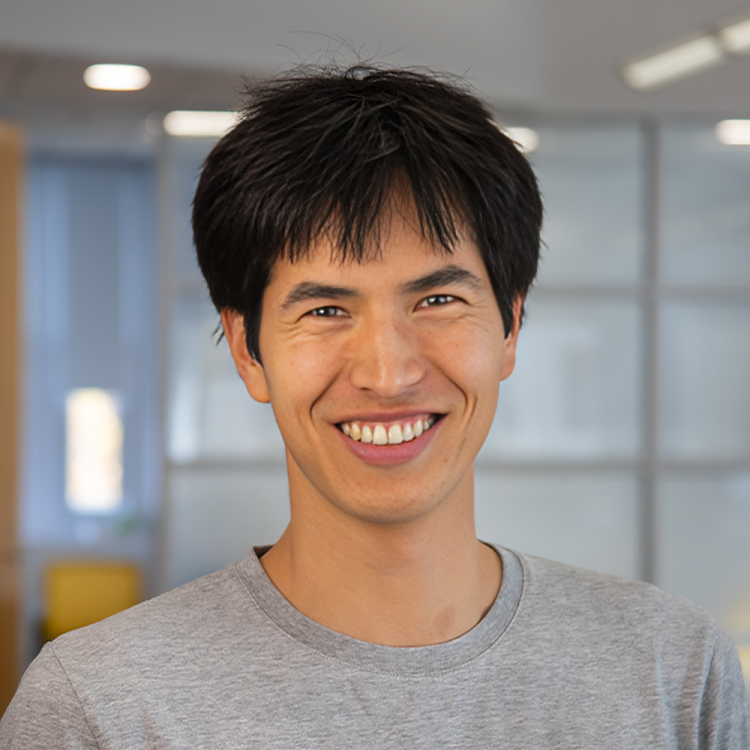




Matt Theurer
CEO & Co-Founder of HyperSpectral
Matt Theurer, CEO & Co-Founder of HyperSpectral: $8.5 Million Raised to Power the Future of AI-Powered Spectral Intelligence


Meryem Arik
CEO & Co-Founder of Titan ML
Meryem Arik, CEO and Co-Founder of TitanML: $2.8 Million Raised to Revolutionize LLM Deployment


Douwe Kiela
CEO and Co-Founder of Contextual AI
Douwe Kiela, CEO and Co-Founder of Contextual AI: $20 Million Raised to Build the Future of Enterprise Language Models

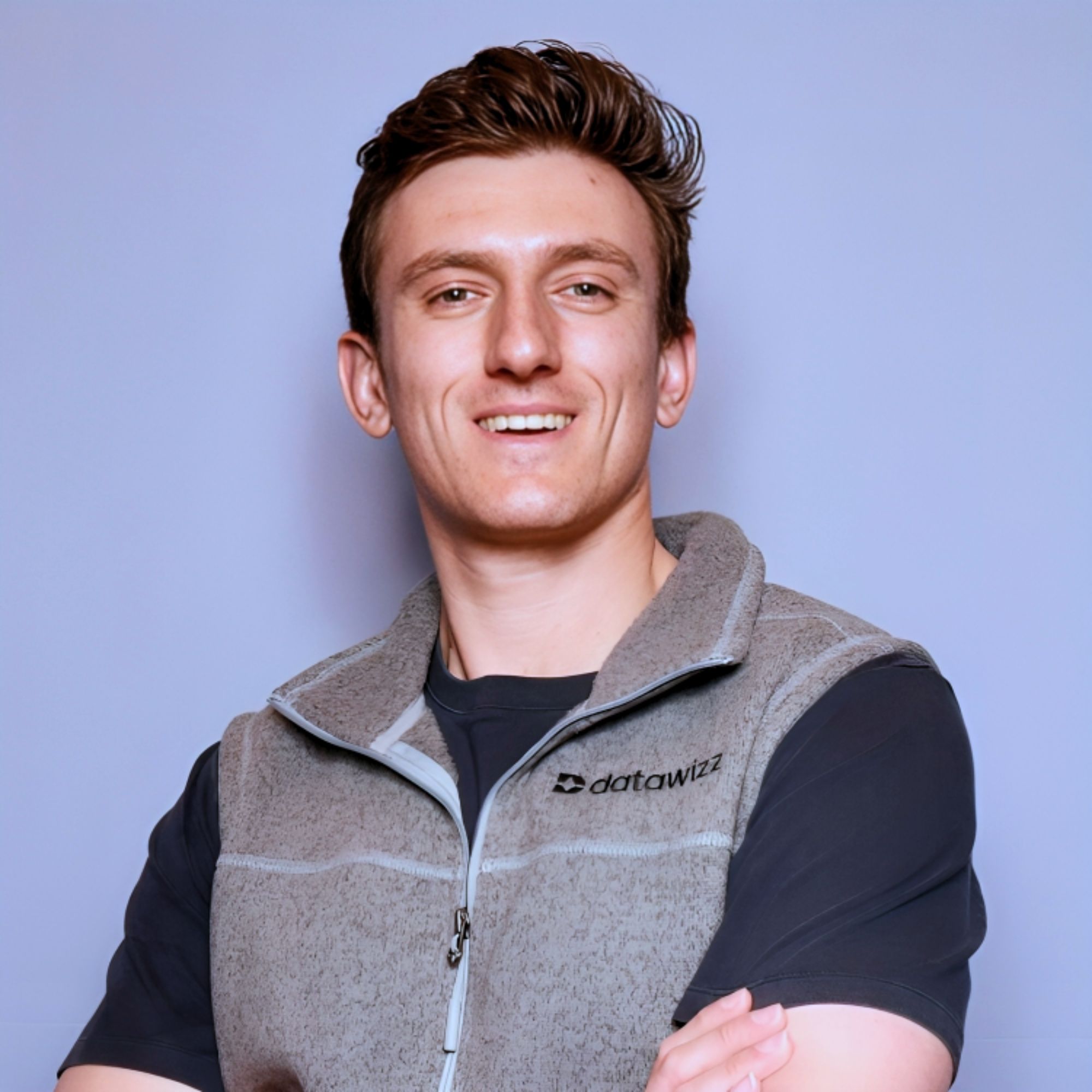
Iddo Gino
CEO & Founder of Datawizz
How Datawizz discovered the chasm between AI-mature companies and everyone else shaped their ICP | Iddo Gino

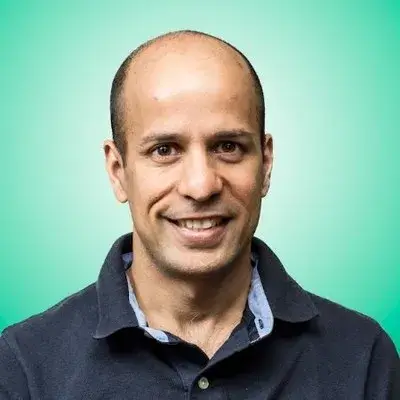


Phillip Liu
CEO of Trustero
Phillip Liu, CEO of Trustero: $8 Million Raised to Build the Future of Compliance AI


Krish Ramineni
CEO of Fireflies
Krish Ramineni, CEO of Fireflies: $19 Million Raised to Build the Future of AI Meeting Assistants

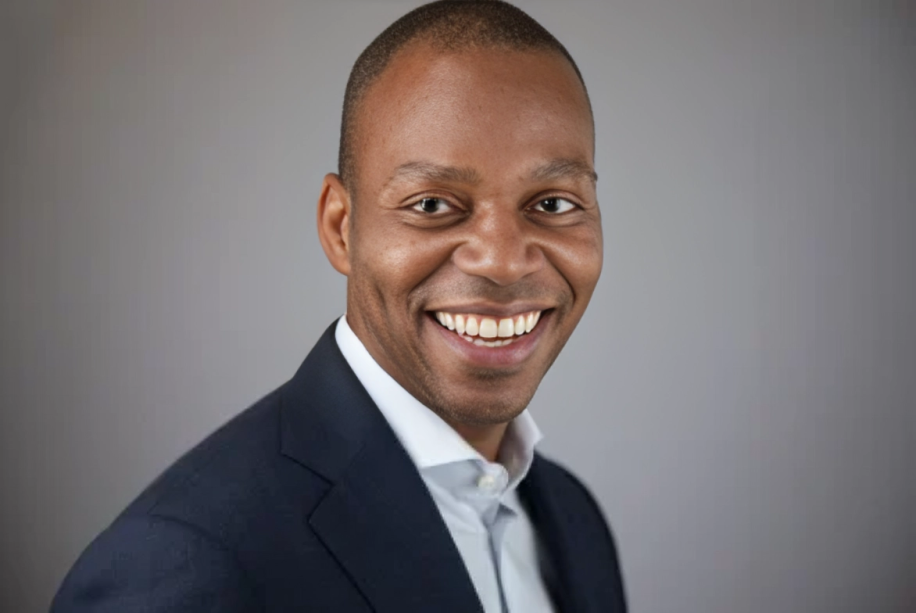
John Belizaire
CEO of Soluna
John Belizaire, CEO of Soluna: $180 Million Raised to Power the Future of Renewable Computing for AI

Rodrigo Liang
Co-Founder and CEO of SambaNova
Rodrigo Liang: the Story of SambaNova ($5+ Billion Valuation)


Kostas Pardalis
Co-Founder & CEO of Typedef
Why Typedef starts go-to-market activities during the design partner phase instead of after | Kostas Pardalis ($5.5M Raised)


Igor Jablokov
Chairman of Pryon
Igor Jablokov, Chairman of Pryon: $50+ Million Raised to Build the Future of Enterprise Knowledge Management


Aimen Chouchane
Head of Marketing of IntelexVision
How IntelexVision Markets AI Video Analytics to Security Buyers


Bob van Luijt
CEO and Co-Founder of Weaviate
Bob van Luijt, CEO and Co-Founder of Weaviate: Over $67 Million Raised to Power the Future of Vector Databases

Justin Fineberg
CEO & Co-Founder of Cassidy
How Cassidy achieved 90% content performance consistency across TikTok and Instagram | Justin Fineberg


Inna Sela
CEO & Founder of illumex
Inna Tokarev Sela, CEO & Founder of illumex: $13 Million Raised to Power the Future of Enterprise LLM Deployments


Barbara Lewis
CMO of Coactive AI
The Siebel vs Salesforce Truth Every B2B Marketer Should Know


Adi Bathla
CEO & Co-Founder of Revv
Adi Bathla, CEO & Co-Founder of Revv: $33 Million Raised to Power the Future of Auto Repair


Johannes Peeters
Co-Founder & CEO of VoxelSensors
Johannes Peeters, Co-Founder & CEO of VoxelSensors: $7 Million Raised to Build the Future of Spatial Computing


Darko Vukovic
CEO & Founder of PolyAPI
Darko Vukovic, CEO & Founder of PolyAPI: $5 Million Raised to Transform Enterprise Middleware Through Native Code Developm


Kirti Dewan
Chief Marketing Officer of Fiddler AI
How to Lead an Internal AI Workshop w/ Kirti Dewan, Chief Marketing Officer of Fiddler AI


Sumanyu Sharma
CEO & Founder of Hamming AI
How Hamming AI accidentally created a new category by focusing on customer problems instead of category creation | Sumanyu Sharma ($3.8M Raised)


Andrew Shoaff
Chief Customer Officer and Head of Product of Rohirrim
Why Rohirrim moved product management under customer success instead of engineering | Andrew Shoaff


Suman Kanuganti
How Personal AI scales enterprise contracts by selling to COOs and business users first | Suman Kanuganti ($16M Raised)

Jeong-Suh Choi
CEO of Bobidi
Jeong-Suh Choi, CEO Bobidi: Nearly $6 Million raised to Deliver Better, More Inclusive AI Solutions for Developers


Sud Bhatija
Co-Founder & COO of Spot AI
Sud, Co-Founder & COO of Spot AI: $93 Million Raised to Build Video AI Agents for the Physical World

Ryan Alshak
CEO & Founder of Laurel
Ryan Alshak, CEO & Founder of Laurel: $55.7 Million Raised to Build the Future of Gen AI for Timekeeping


Joe Witt
CEO & Co-Founder of Datavolo
Joe Witt, CEO & Co-Founder of Datavolo: $21 Million Raised to Unlock the Potential of Unstructured Data for AI


Mitesh Agrawal
CEO of Positron
How Positron AI is driving sales ahead of product | Mitesh Agrawal

Soham Mazumdar
How Wisdom AI reduces enterprise trial time-to-value from weeks to minutes | Soham Mazumdar


Jason Corso
Co-Founder and Chief Science Officer of Voxel 51
Jason Corso, Co-Founder and Chief Science Officer of Voxel 51: $15.5 Million Raised to Build the Future of Developer Tools for Machine Learning

Ravin Thambapillai
CEO and Co-Founder of Credal
Ravin Thambapillai, CEO and Co-Founder of Credal: $5 Million Raised to Build the Future of AI Security